Book Event

Showing posts with label criticism. Show all posts

Wednesday, December 10, 2008

When a Vermeer isn't a Vermeer, or I Bought What?

When is a painting considered a treasured masterpiece worth millions of dollars and then in a blink of an eye, it's an embarrassment viewed as poor quality art worth a few dollars at most? Read The Forger's Spell: A True Story of Vermeer, Nazis, and the Greatest Art Hoax of the Twentieth Century by Edward Dolnick and you'll find out the answer to that question as this book explores the true story of Han van Meegeren, a Dutch forger who fooled most of the art world.

Van Meegeren was a second rate artist who successfully painted several works which he passed off as having been done by Johannes Vermeer. The forgeries have many flaws in them, making one wonder how the art world was duped into believing that the works were authentic. While Van Meegeren wasn't gifted in artistic technique, he was skilled in the psychology of forgery. He knew that if he could get art critics to authenticate the artwork, there wouldn't be much problem in getting eager art collectors to purchase them. He developed a technique to age his paintings so that they would pass scientific tests done to verify the age of the materials. Abraham Bredius, who was considered to be the leading authority on Vermeer, judged one of Van Meegren's forgeries as being authentic, and the rest of the art world jumped on board and agreed that the painting was 100% genuine.

After that, it was smooth sailing for Van Meegeren until he was arrested after World War II had ended and he was charged with collaborating with the enemy. What happened was that he was connected with the sale of what was thought to be a genuine Vermeer, Christ and the Woman Taken in Adultery, but it was really one of his forgeries. The painting ended up being sold to Nazi Hermann Goering, who was a fanatical collector of art masterpieces. The sale of a national treasure to an enemy was a crime that was punishable by death. Since forgery was a far less serious crime, Van Meegeren confessed that he had really painted the supposed Vermeer, unfortunately no one believed him. In court, to show that he really was the painter of the Vermeer in question, he demonstrated his technique and was able to convince the court that his story was true.

This book raises many issues regarding the art world, including the debate over what is art, egoistic art critics who authenticate artwork by instinct rather than through scientific investigation, and the plundering of art during wartime. Van Meegeren had been angry at the art world because his paintings were criticized for being trite and not innovative. He felt that the art critics were hypocritical and he certainly got his revenge when his forgeries were promoted as beautifully painted genuine masterpieces.

My one criticism regarding the book is that it had a lot of buildup and seemed to take awhile before it got to the climax of the court trial. There were many preliminary chapters about other forgers, forgery techniques, and other information that could have been edited down a bit. Other than that, I found the subject very intriguing.

Thursday, October 23, 2008

I'm Ready For My Close-Up

Why did Jun Nakayama abandon his silent film career at the height of his popularity? In The Age of Dreaming, Nina Revoyr narrates the story of a handsome Japanese movie star who, in the early 1900's, took Hollywood by storm. In collaboration with the famous director Ashley Tyler, and the sophisticated actress, Elizabeth Banks, Nakayama made several intriguing films that brought him popular and critical aclaim. But after ten years of fame he abandoned his career and began a quiet life in obscurity. Revoyr starts her tale in the 1960's when Nakayama is "rediscovered" by Bellinger, a screenwriter who has studied his movies and thinks he would be perfect for a part in his new script. While researching Nakayama's films, he becomes captivated by the still unsoved murder of Ashley Tyler, and tries to link this mystery to the japanese actor. As Nakayama revisits his past to try to prevent the truth from being revealed, he begins to realize that his choices had consequences that affected the lives of many people, and that he still might have a chance at redemption.
Unspooling slowly, like a silent movie, The Age of Dreaming goes beyond the murder mystery, into the craft of film-making itself. After reading the novel, I researched collections of silent films, and promised that I would look beyond the comedies of Buster Keaton and Charlie Chaplin to explore some of the dramatic films that are still available. Through Revoyr's characters, who are based on real people who lived in the Hollywood movie community, the silent film tradition is revived and celebrated.


Saturday, August 30, 2008

You can't go home again (or can you?)

Pregnant, ashamed, and tired, grad student Willi Upton returns home to Templeton where she knows she can recuperate in the only place that never changes. Templeton (read Cooperstown), however, is failing to cooperate. Glimmy, the town's answer to the Loch Ness Monster, dies and surfaces in the middle of Lake Glimmerglass. Her hippy single mom is dating a conservative preacher and joins him in prayer for Willi's soul. The dumb jock heart-throb who never left town after high school is wooing her with words like "hegemony."

While she waits for her married archeology professor to call and profess his undying love for her and their child-to-be, her mother proposes a research project. Willi knows that she is twice related to Marmaduke Temple, founder of their town. She had always been told that her father was one of three random men at a hippy gathering, but her mom revealed that this was a tale concocted to preserve his identity. She challenges her daughter to read letters and genealogical archives that pertain to her family and deduce her true biological roots. The only clue her mother gives her is that, like Willi, her father also had family ties to Templeton's founder.

Lyrically written, The Monsters of Templeton by Lauren Groff makes the small upstate town of Templeton the main character of this novel. Groff explores the history of Templeton through its residents' stories; including those of the original Native Americans, settlers, town characters, and literary figures. In the end, Willi learns how to redefine the meaning of family, and how to finally embrace change.


Monday, August 18, 2008

A New Design on Life

Loving Frank by Nancy Horan is one of those novels that makes one reflect upon the role of women, and the degree of progression that has occurred over the last 100 years or so. Even though his name is in the title, this book isn't about the great American architect, Frank Lloyd Wright. Well, it is and it isn't. The focus of this historical novel is on Mamah Borthwick Cheney, a woman Wright had fallen in love with after designing a new home for her and her husband Edwin. Wright is more than just her lover, he is the catalyst that ignites a fire within her to embark upon a whole new life. A life where she has the freedom to have a career of her choosing and her own identity, instead of just being Mrs. Edwin Cheney. It is an age of modernization as Wright tries to usher out the old classical style of architecture and introduce one that is more natural and practical. Meanwhile, Mamah Cheney is trying to bring in a new era where women are able to have a spouse and career of their choosing. Unfortunately, neither one of them has an easy time as the constraints of society try to force them into the conventional way.

Mamah Cheney makes the difficult decision to leave her husband and children to attempt a life with Wright and to also fulfill her dream of translating books. No matter how you feel about her choice, one has to emphasize with her as she anguishes over not having her children by her side and having to face the vicious attacks from Victorian society. For those of you who don't know what happened to Mamah Cheney, I won't reveal it. But suffice it to say that the tragic events that occur make this story all the more heartbreaking.

Nancy Horan deftly weaves historical fact with dramatized events to create this slice of one woman's personal fight against a society resistant to change. For other stories with similar themes, The Awakening by Kate Chopin and "The Yellow Wallpaper" by Charlotte Perkins Gilman are both worth investigating.

Thursday, August 14, 2008

Bershert (It was meant to be)

Ayelet Waldman's Love and Other Impossible Pursuits begins at "happily ever after" and slowly unravels towards grim reality. Emilia Greenleaf, a young lawyer, is used to getting what she wants, and she wants Jack, a partner in her law firm. Since she realized that he was her "bershert," she had no ethical problems with seducing him away from his beautiful obstetrician wife and their precocious five year old son. Now Jack and Emilia are married and live in an expensive townhouse off Central Park West. But her life is no fairy tale. She and Jack lose their baby Isabel after her first day at home. Her stepson William wants nothing to do with her and is driving a wedge between her and Jack, much to the delight of the scorned wife. She is furious that her parents are reuniting after thirty years of hatred fueled by Dad's indiscretions. And Emilia has a secret that is too horrible to tell anyone, especially Jack. Can a marriage based on romance and magic adjust to the real problems of life? Read it and find out!

Monday, July 28, 2008

The Art of the Crime

The Art Thief by Noah Charney will make you wonder if the painting you are admiring in a museum is really the great masterpiece it purports to be or is it really a forgery made by a master craftsman? After reading this book, one would hard pressed to not be suspicious of the authenticity of the artwork in a museum. The author brings us into the world of art thefts and forgeries, where great masterpieces are cleverly stolen by knowledgeable and crafty thieves who may actually be respected scholars who are well versed in the tools and methods used in art theft and forgery. Charney assembles an intriguing cast of characters such as an eccentric art professor and a comical French inspector who always seems to be eating gourmet meals. Charney, who is an art scholar and consultant on the prevention of art crime, utilizes his experiences to create this fascinating tale. Charney mixes in true accounts of art crime in with his fictional tale, such as the still unsolved theft of thirteen works of art from the Isabella Stewart Gardner Museum in 1990. After reading this novel, you will never look at a painting the same way again.

If you are interested in other novels about art thefts and forgeries, you might want to check out books by Aaron Elkins, Jonathan Gash, and the Vicky Bliss mystery series by Elizabeth Peters. In the future, I'll be reviewing a new book entitled The Forger's Spell, which is about one of the most masterful art forgers in history, Han van Meegeren.


Thursday, July 24, 2008

The Ties That Bind

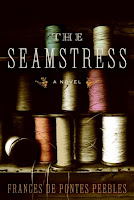
The Seamstress by Francis de Pontes Peebles mixes the tales of Robin Hood with the mannered novels of Henry James to create a portrait of life in early 20th century Brazil. Two orphaned sisters are adopted by their seamstress aunt who teaches them the ways of sewing and couture. It is an inheritance that serves them well when one becomes a fine lady and one becomes an outlaw. The author interweaves her story of the lives of the sisters with fascinating Brazilian history that encouraged me to go to the encyclopedia and find out what was true and what was fiction. A must for historical fiction buffs!